








Diana Flynn Creates Dimensional Textile Works Shaped by Movement, Memory and the Sea
Finding form.
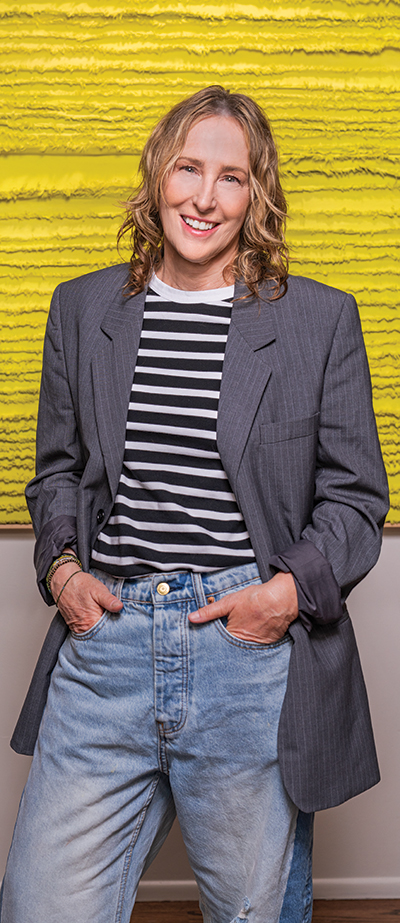 Diana Flynn is an artist without a performative persona. As natural as she is talented, she meets you without pretense or ego. She’s cool, but not trying to be. Thoughtful, curious and deeply grounded, she’s a woman who has lived a richly layered life and pulled threads from each chapter to create something entirely her own.
A textural artist, Diana’s work feels at once sculptural and soft—tactile, intentional and quietly compelling. But art wasn’t her first act. Raised in Northern California, she studied business and public relations at San José State before heading straight into the tech world, landing a marketing role at Apple Computer.
“That was fun for the time I was doing it,” she says. “I got to travel, meet a lot of people and learn the basics of business—how to conduct yourself and how things work.”
When the early internet boom took off, Diana did what she now laughs about: She went in the opposite direction. While others chased dot-com dreams, she launched a colorful, boutique-driven dog toy brand called Otis and Claude.
“I’ve always loved color. The toys were named Bettie and Lucy—kind of modeled after the cosmetics industry,” she says of the creative outlet that evolved into a full-scale manufacturing business that she ran for nearly a decade.
Life, as it often does, shifted again. Marriage, cross-country moves and eventually motherhood led her first to Charleston, South Carolina, then to a small town in Pennsylvania, where she and her husband raised their two sons. After selling her company, she stepped away from business entirely.
“At some point it was just too much—manufacturing, logistics, kids,” she explains. “I stayed home for a few years trying to figure out what I would do next.”
That “next” arrived quietly—through sewing lessons, bucket hats made for her kids and fabric spread across the kitchen table. What started as play became experimentation: fabric torn, frayed, painted and manipulated.
 “I wasn’t really good at sewing,” she admits with a laugh, “but I started painting the fabric, and things just began to evolve.”
When the family decided to move back to California, Manhattan Beach wasn’t the obvious choice, but strong public schools sealed the deal. Her sons were 7 and 9—perfect ages to start fresh.
“I remember thinking, I won’t do another winter,” she says. “We decided in May and arrived in August.”
It was here in the South Bay that Diana’s art truly took shape. Entirely self-taught, she leaned in to instinct rather than rules.
“I’ve learned that I like to turn things on their head and do something totally different without any knowledge of it,” she says.
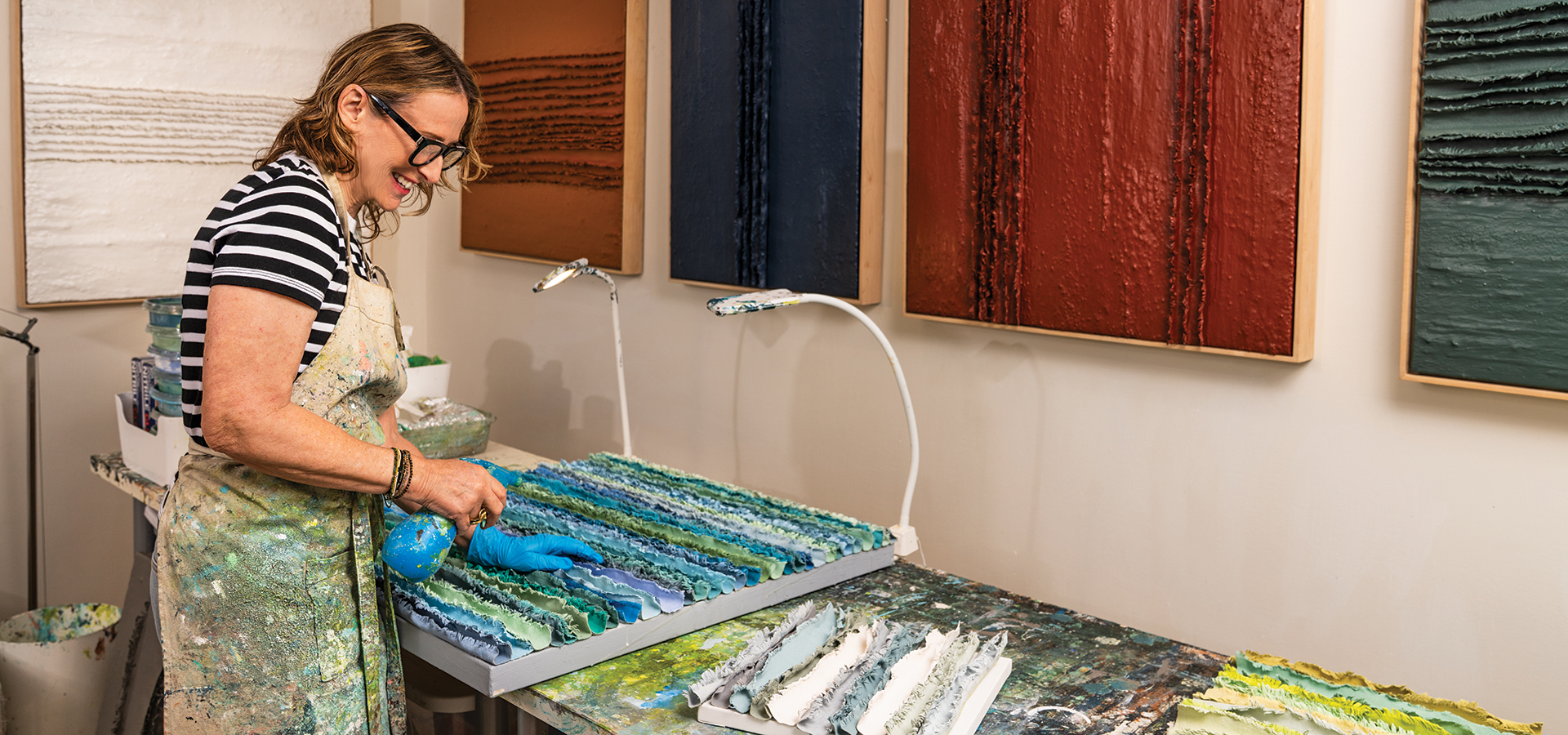
Early works included painted fabric tapestries and block print–inspired panels—many influenced by vintage woodblock prints she collected at East Coast flea markets. Over time, her practice evolved into what she’s known for today: dimensional wall pieces made from raw cotton canvas, ripped and frayed by hand, layered and adhered, then painted with acrylic and mixed media.
“I like the idea of ripping things apart and then building them back up,” she says. “I’m literally working the fabric—moving it with my hands. It feels like I’m putting myself into it.”
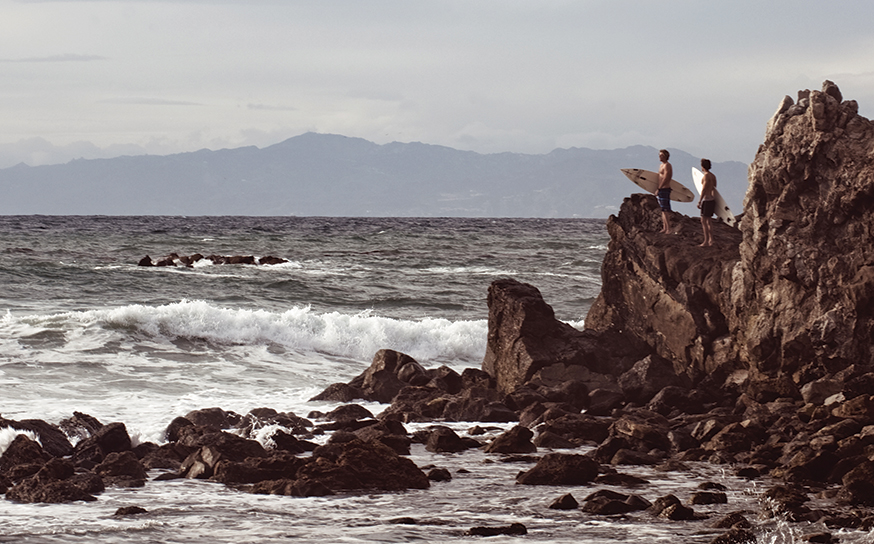
That physicality is evident. Her pieces undulate like water, echoing the rhythm of the ocean just blocks from her home. Blues and greens appear often.
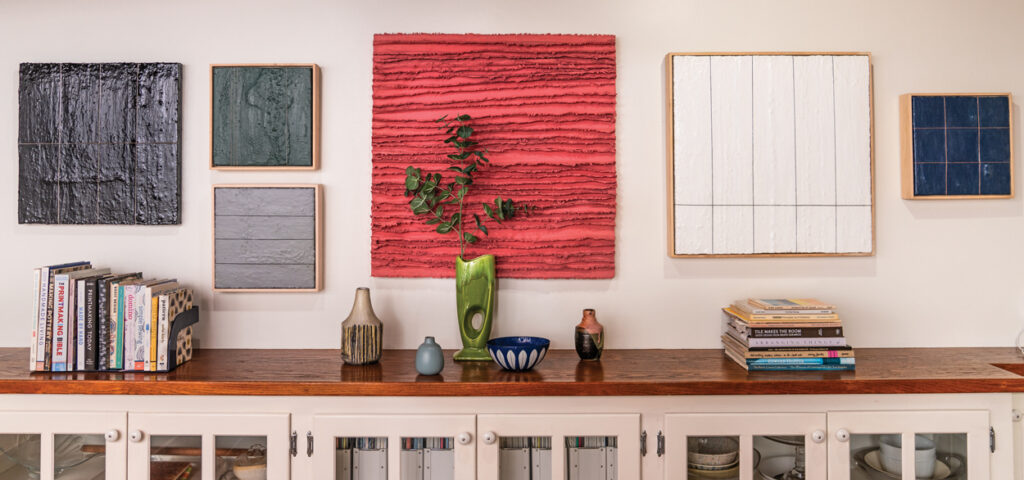
“When you live here, that’s what people want,” she says of her palette, which exudes restraint and sophistication. Her work feels calm, grounded and architectural.
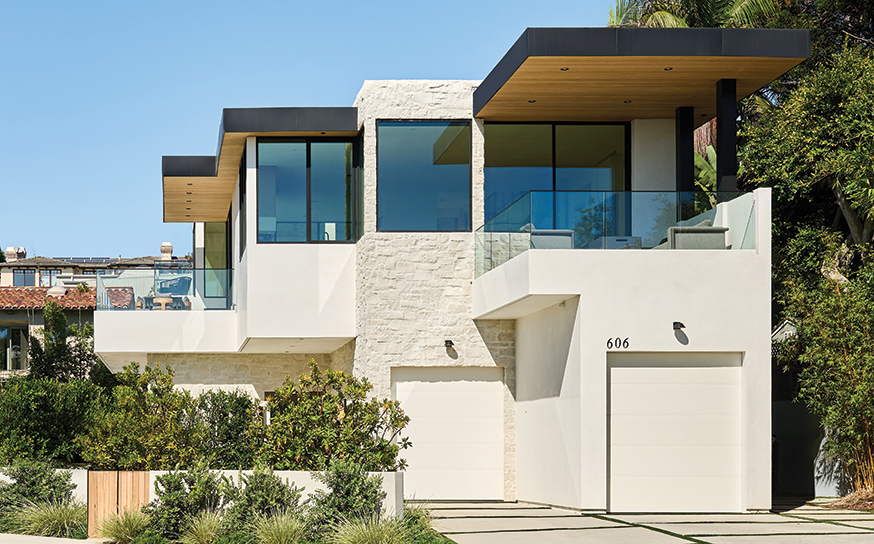
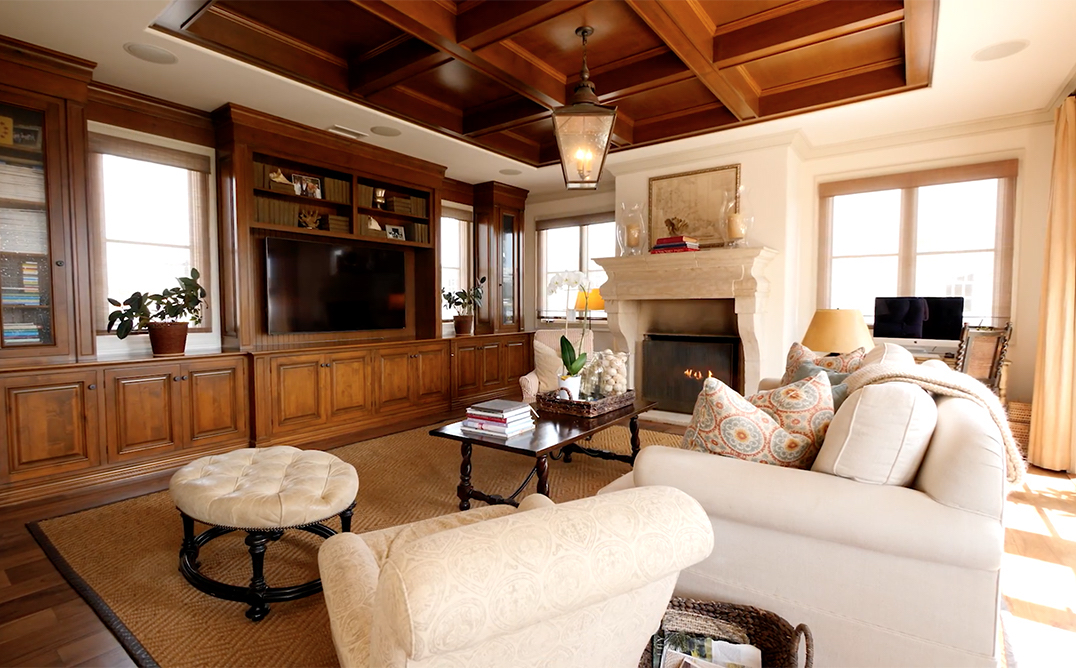
We photographed Diana in her Manhattan Beach home—a warm, mid-century modern space where her art lives effortlessly on the walls. Each piece adds depth and movement, bringing texture and color to clean lines and sun-washed rooms.
The house doubles as her studio. “Our family room is the studio,” she says. “It’s not nearly big enough, but it works.”
Today much of her work is commission-based, with clients drawn to her ability to create pieces that feel personal yet timeless. Because the work is so tactile, she’s begun offering small samples.
“You really need to see it in person,” she says. “It’s not flat art; it’s dimensional.”
Diana doesn’t rush the process or overexplain her work. Like her art, she allows space for evolution, imperfection and intuition. What she’s built is a distillation of everything that came before: business, motherhood, movement, color and fabric, all woven together.
That’s what makes her work resonate so deeply. It’s thoughtful and quietly bold. Like Diana herself.