









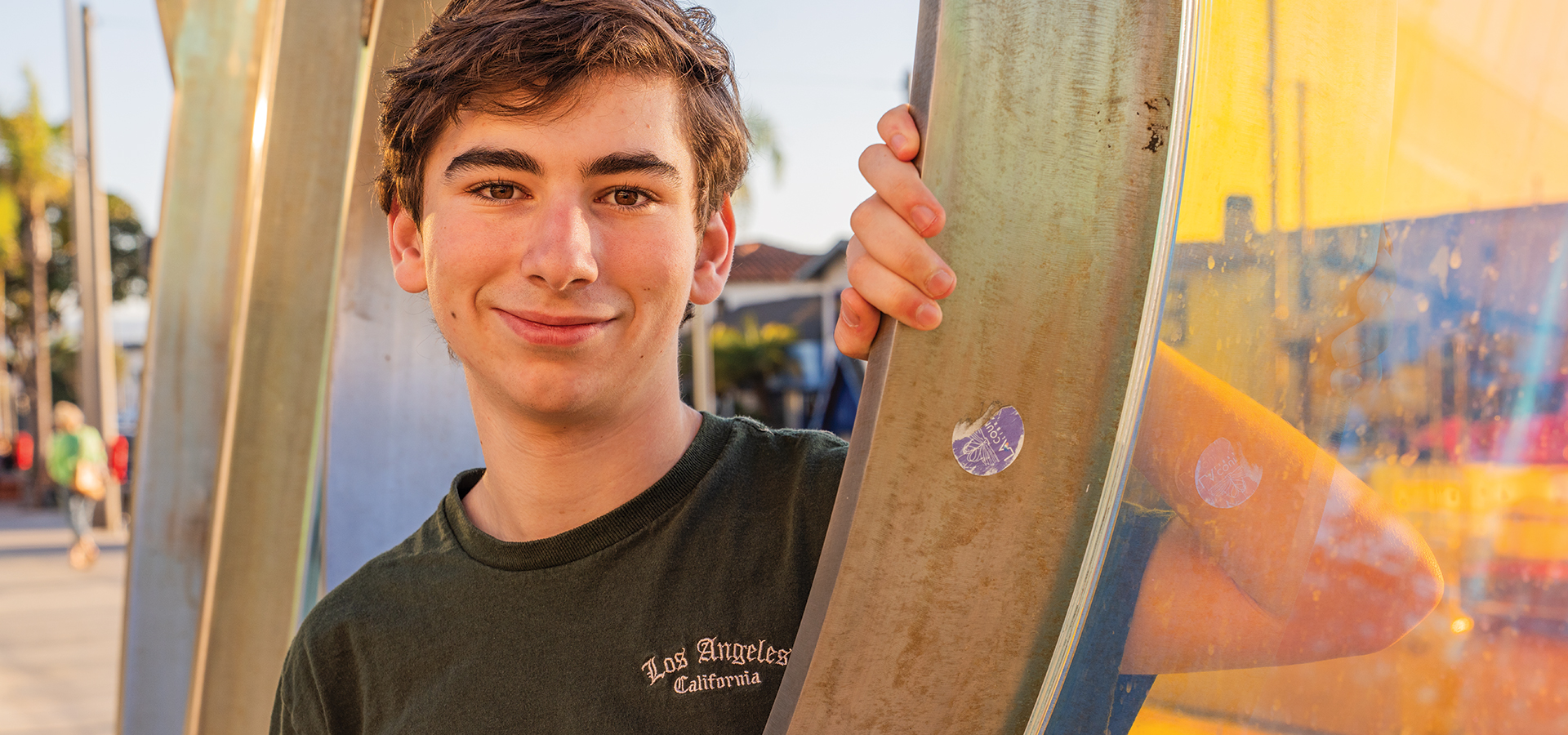
These South Bay Teens Are Channeling Their Passions into Purpose as They Prepare to Take on the World
Faces of the future.
- CategoryPeople
- AboveJonah Segil
- Photographed byShane O’Donnell
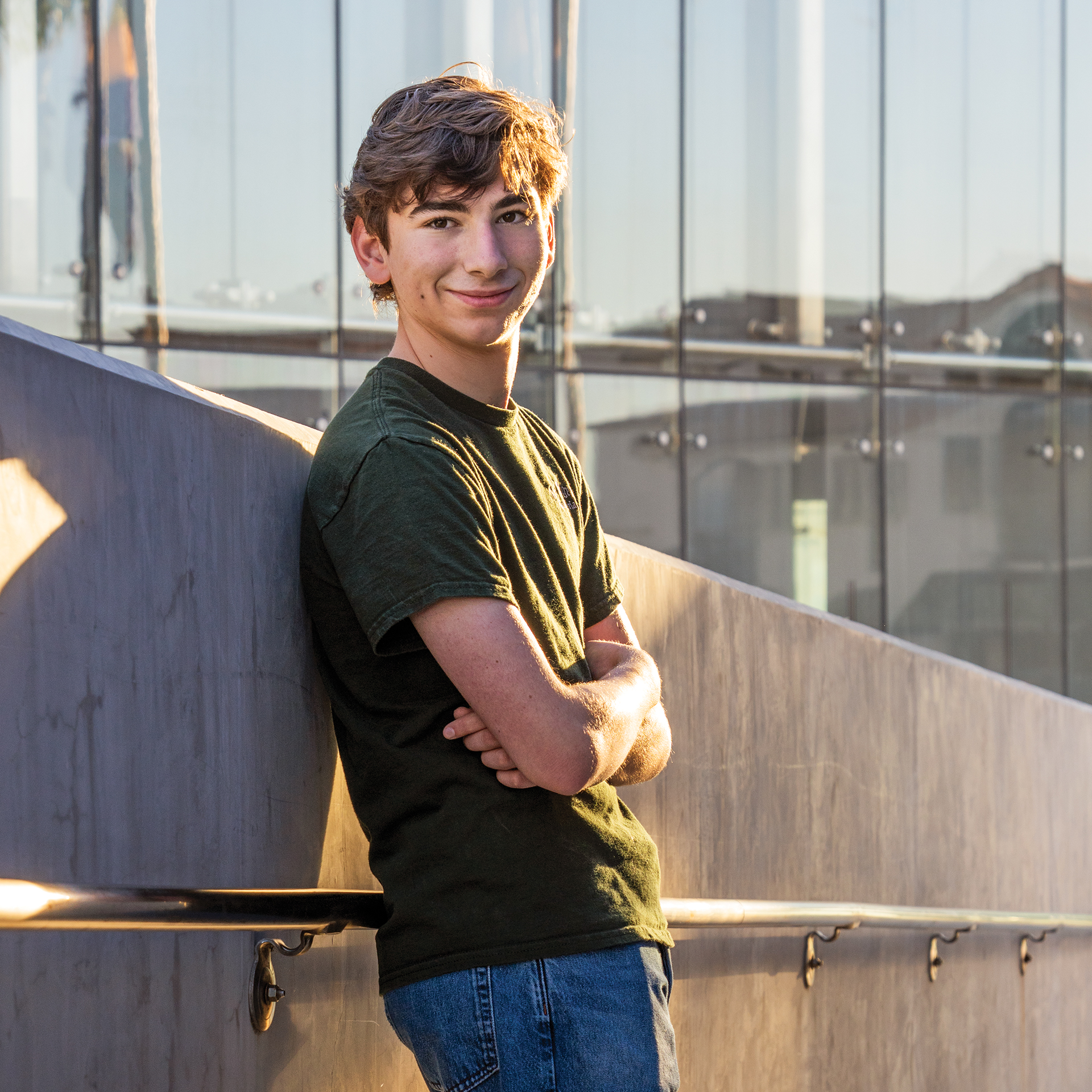
JONAH SEGIL
Written by Tanya Monaghan
On a quiet residential street in Manhattan Beach, Jonah Segil greets me with an easy smile and an energy that feels both earnest and infectious. He’s sweet, animated and thoughtful—the kind of teenager who leans forward when he talks, hands moving as ideas spill out.
Sitting in his family home, it’s immediately clear that Jonah isn’t performing or posturing. He’s genuinely curious about the world around him and deeply attuned to the people in it. Then he begins describing what he’s been working on—advocacy, research, fundraising, policy—and it becomes clear that I’m in the presence of someone truly remarkable.
At just 16, Jonah is a nationally engaged LGBTQ+ advocate, a fundraiser who has helped generate more than $85,000 for lifesaving research, and a research assistant at the UCLA Center for LGBTQ+ Advocacy, Research & Health. He has already coauthored academic papers and is currently developing his own original research. It’s the kind of résumé that would stand out at any age, but it’s Jonah’s heart, clarity and quiet confidence that give his story its power.
“I wouldn’t narrow it down to one specific experience,” Jonah says when asked what first sparked his advocacy. “Even though I come from a really accepting community, I was bullied in middle school when I first started coming out—just for being effeminate, for how I acted. I knew what it felt like to be a minority, to feel like you weren’t wanted because of your identity.”
That experience stayed with him. When Jonah entered high school, he found a far more welcoming environment. But he never forgot how isolating those earlier years had felt. His turning point came when he was invited to speak on a PFLAG panel while still a teenager.
“That really kick-started everything,” he says. “All of what I had been through made me want to speak out.”
Words soon turned into action. Jonah joined the Beach Cities Health District Youth Advisory Council in eighth grade and has remained deeply involved ever since, eventually serving as public speaking lead and liaison to Mira Costa High School. He founded and now co-presides over the Social Advocacy Club, helped lead efforts opposing book bans and interned with State Senator Ben Allen, focusing on LGBTQ+ policy and community outreach. Along the way, he sharpened his voice through Model United Nations, earning awards at regional, national and international conferences.
Being a teenager, Jonah believes, isn’t a limitation; it’s an advantage. “No one’s really doing this kind of LGBTQ+ advocacy at my age,” he says. “People want to hear teen voices. They want to know how we’re feeling. That gives me an outlet—and it makes the journey feel meaningful, like people want to follow it.”
That sense of urgency took on new meaning at the end of Jonah’s sophomore year, when he decided to expand his impact beyond local panels and councils. He did what few high school students would think to do: He began cold-emailing major LGBTQ+ research and advocacy organizations across Los Angeles, offering to volunteer.
One of those emails landed on the desk of Dr. Matthew Mimiaga, director of the UCLA Center for LGBTQ+ Advocacy, Research & Health. His response was encouraging—but sobering. The center had recently lost millions in federal funding and was facing the possibility of halting critical research and laying off staff.
“When I learned about the cuts, I was in shock,” Jonah recalls. “During my research, I’d seen all the lifesaving work they do: HIV prevention, treatment, public health policy. I was enraged—not because they didn’t have a position for me, but because of the decisions that were stopping this work.”
That outrage quickly became resolve. Jonah brought his parents into the conversation, helped organize a fundraising committee and worked directly with the UCLA team to build a pitch deck, refine messaging, create an advisory board and launch outreach efforts. He began calling friends, family and community members—anyone who might listen.
So far, the effort has raised more than $85,000. “It’s a drop in the bucket compared to what the center needs,” Jonah says, “but it shows what’s possible when people come together.”
What happened next surprised even him. Impressed by Jonah’s leadership, work ethic and intellectual curiosity, Dr. Mimiaga invited him to join the center—not just as an advocate but as a research assistant.
“Jonah’s contributions are uniquely meaningful,” he explains, “because he represents the next generation of leaders in LGBTQ+ advocacy and policy work. It’s incredibly rare to see someone so early in their career demonstrate this level of maturity, depth, curiosity and commitment.”
Today, Jonah is co-authoring academic papers focused on HIV and LGBTQ+ health and is working on his own research examining the impact of government policy on LGBTQ+ youth.
“It’s opened my eyes to new ways of creating change,” Jonah says. “Advocacy isn’t just speaking out. It’s contributing to research that shapes policy and saves lives.”
Despite all he has accomplished, Jonah remains deeply grounded. When asked what he hopes younger kids take away from his journey, his answer is simple and compassionate.
“I want them to know that no matter what they’re going through right now, they’ll come out the other side,” he says. “The world isn’t always how it feels in middle school or high school. One day they’ll be able to be themselves fully.”
And for adults, he offers a gentle reminder. “There’s this idea that we’re past homophobia and bullying,” Jonah says. “But we’re not. It still happens. And especially right now, when LGBTQ+ rights are being pushed back in so many places, we can’t stop paying attention.”
Jonah is proof of what can happen when empathy meets action—and when a teenager decides that waiting isn’t an option. In a world that often underestimates young voices, Jonah is using his to change conversations, influence policy and remind communities far beyond his own that meaningful impact has no age requirement.
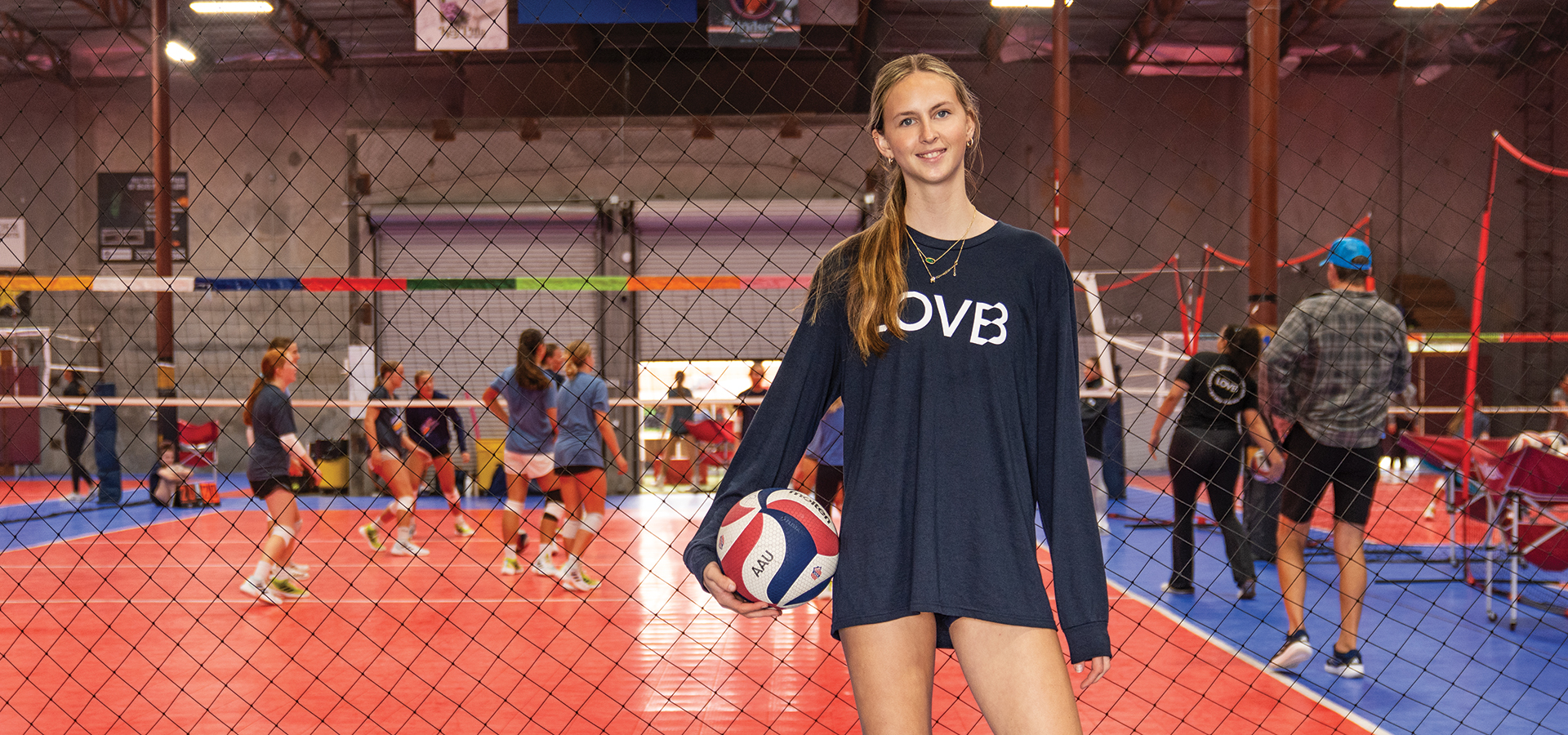
AUDREY FLANAGAN
Written by Darren Elms
Growing up in Redondo Beach, Audrey Flanagan spent most of her childhood on the sand. She remembers playing on the main court at an Association of Volleyball Professionals tournament just before the pros, competing in the 10U championship.
“I was playing other sports, including basketball, soccer and softball, but I always knew volleyball was the sport for me,” she says.
Audrey began playing volleyball seriously around age 7, and by age 16 she had won numerous local and national gold medals in pairs tournaments. “My cousins and one of my brothers played volleyball, so it was always around me.”
As a freshman at Mira Costa, she joined the beach varsity volleyball team and helped win two CIF National Championships. As a sophomore, she started on the varsity indoor team, helping take her team to the Southern Section finals.
Her success extends well beyond the high school level. With her club teams, Audrey won both gold and bronze medals at the USA Volleyball Open National Championship. Internationally, she earned gold with the U19 National Team in Honduras in 2024, taking awards for best attacker, receiver and server. A year later, she competed with the U21 National Team in the World Championship.
Her individual accolades include Bay League Most Outstanding Player, First Team All-American honors and All-CIF recognition. In January she competed in the Under Armour All-American Game televised on ESPN. This fall she will join the University of Wisconsin women’s team.
“One of the most important parts of having a successful team is good team chemistry,” Audrey says. “You could have the best individual players, but without chemistry it’s very unlikely to succeed.”
She also credits her coaches for much of her growth and success. “It’s not just about being knowledgeable; it’s about truly caring for each player,” she says.
Audrey cites Kerri Walsh Jennings, Holly McPeak and Kobe Bryant as inspirations. She understands that reaching their level requires discipline, consistent training and a strong work ethic—values she learned from her parents.
“Having three kids who all play sports is not easy, but they make it look effortless and always find a way to make everything work,” she shares. Their support helps her balance a demanding schedule that includes school, lifting, practices and physical therapy for a previous knee injury.
To manage her packed schedule while still enjoying her teenage years, Audrey focuses on tuning out distractions. “It’s easy to get caught up in social media and other people’s opinions,” she explains. “Playing at a high level is demanding, and the schoolwork isn’t much easier. Sometimes it’s hard just to be a kid and enjoy the small moments with friends and family.”
Fortunately, volleyball also gives her opportunities to connect with peers across the country and beyond. “I’ve been able to experience so many things that wouldn’t have been possible otherwise,” she says. “There are so many ways to connect with people now, and it’s made it easier to build friendships no matter where you are.”

KAITO KUBA
Written by Darren Elms
Kaito Kuba grew up in Palos Verdes in a bilingual family that encouraged curiosity, hard work and big dreams. A tennis player since age 7, he learned early the value of consistency and dedication—lessons that would later prepare him for an aspiration demanding even greater focus and discipline.
As his family traveled often, Kaito remembers gazing out airplane windows and wondering what it would feel like to be the person in control. Over time, he became drawn to the unique blend of technical skill, responsibility and precision required to fly an aircraft.
“When I started formal flight training in 2024, I knew immediately this was my path,” he says.
Kaito began flight training at 16, balancing rigorous academics at Palos Verdes Peninsula High School with accumulating flight hours and building experience in the air. Despite his young age, he has already completed cross-country flights, ground school and solo requirements.
On the cusp of earning his private pilot license, Kaito shares, “Every hour in the cockpit strengthens my confidence and decision-making skills.”
He vividly remembers the first time he took control of an aircraft on his own—an unforgettable mix of calm focus and pure adrenaline. “Feeling the plane respond directly to my inputs and knowing my instructor trusted me with that responsibility solidified my desire to pursue aviation long-term,” he says.
Kaito finds purpose in growth through challenge, whether in the cockpit, the classroom or on the court. “My goal is to improve a little every day,” he explains. “If my journey can inspire the next generation of students to pursue their dreams with confidence, that would mean a lot to me.”
With his college applications now submitted, the senior spends most afternoons focused on finishing his final months of school while continuing flight training and staying active. He flies several times a week, weather permitting, and also makes time for pursuits on land and sea—including a newfound love of golf and surfing, which help him clear his mind and reset.
Yet it’s in the air where everything truly aligns. “When I’m flying, everything becomes clear,” he says. “The noise and distractions of the ground fade away, leaving a sense of freedom, purpose and responsibility. Seeing the world from that perspective reminds me exactly why I’m working so hard.”