







Uncle Bill’s Pancake House Anchors Generations with Classic Meals and Lasting Connections
A seat at the counter.
- CategoryEat & Drink, People
- Written byJacob Michael Tan
- Photographed byShane O’Donnell
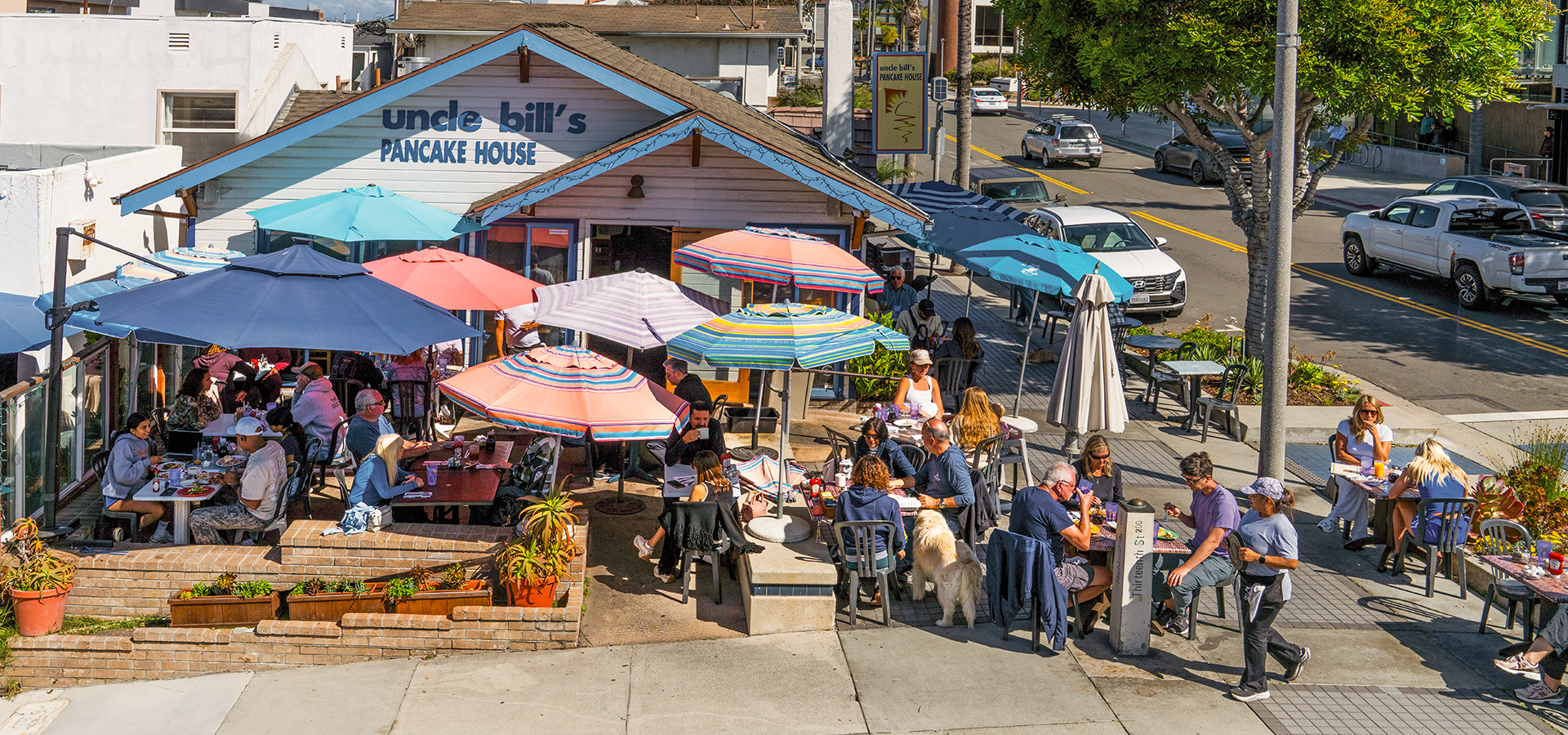
Perhaps the smallest house in all of Downtown Manhattan Beach is a one-story beach bungalow on Highland Avenue, one of the few remaining in the area. Despite its modest footprint and low-slung roof, the blue-trimmed cottage welcomes hundreds of people on any given weekend morning or afternoon. This is Uncle Bill’s Pancake House, a restaurant opened by “Uncle Bill” McElroy in 1961 inside a former walk street home.
P. Allen VanAmburgh bought the restaurant in 1973, remodeled the place a bit and added a few tables. The family still owns the property today, more than 50 years later. On any summer morning, the draw is as much about nostalgia as it is about food.
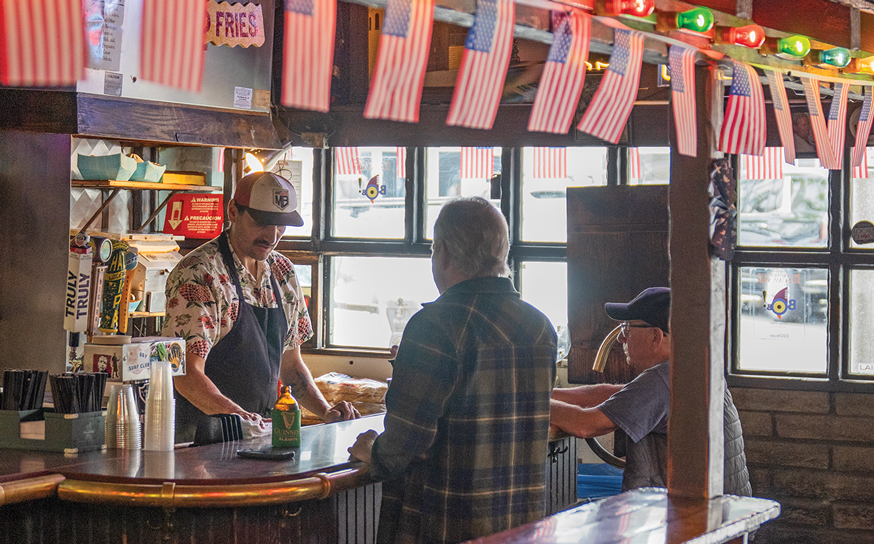
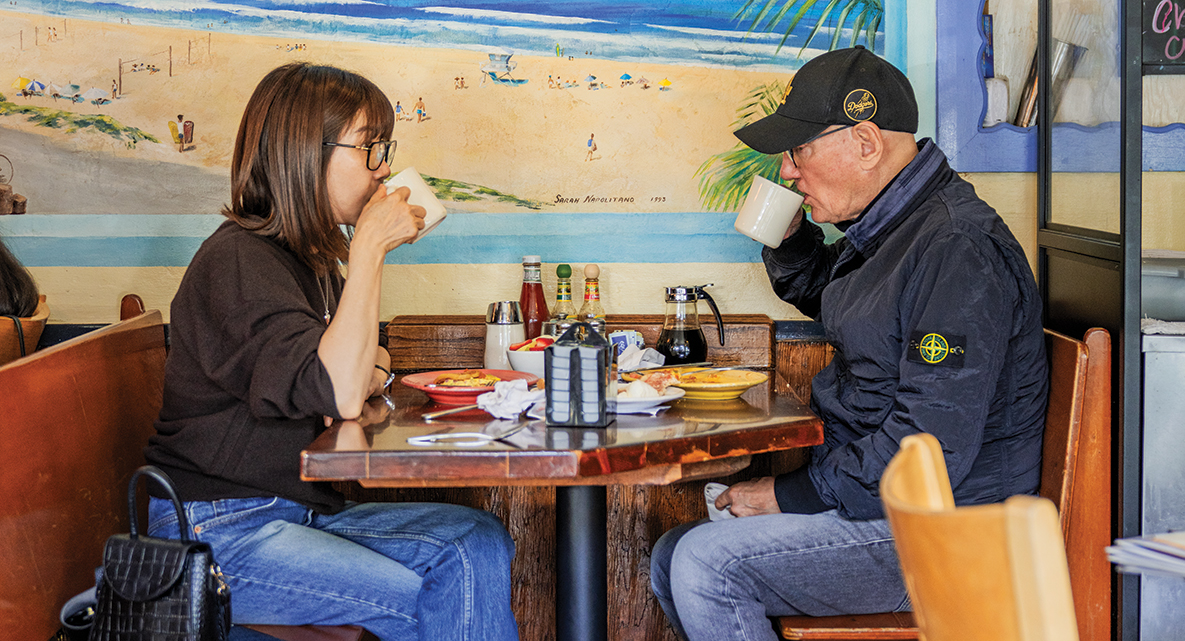
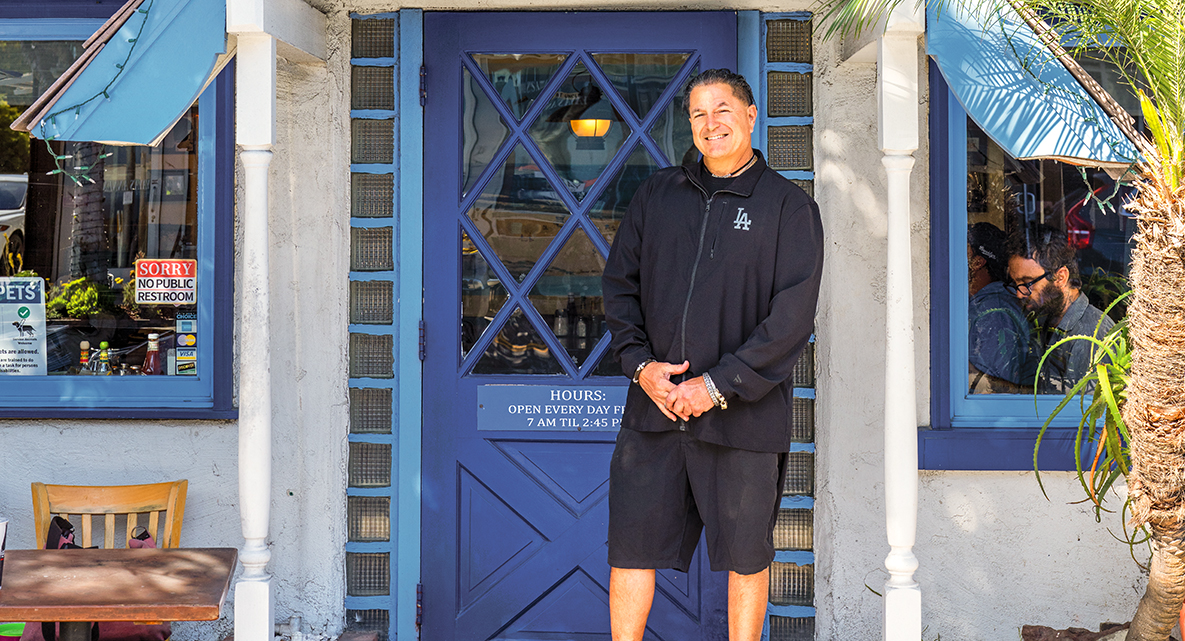
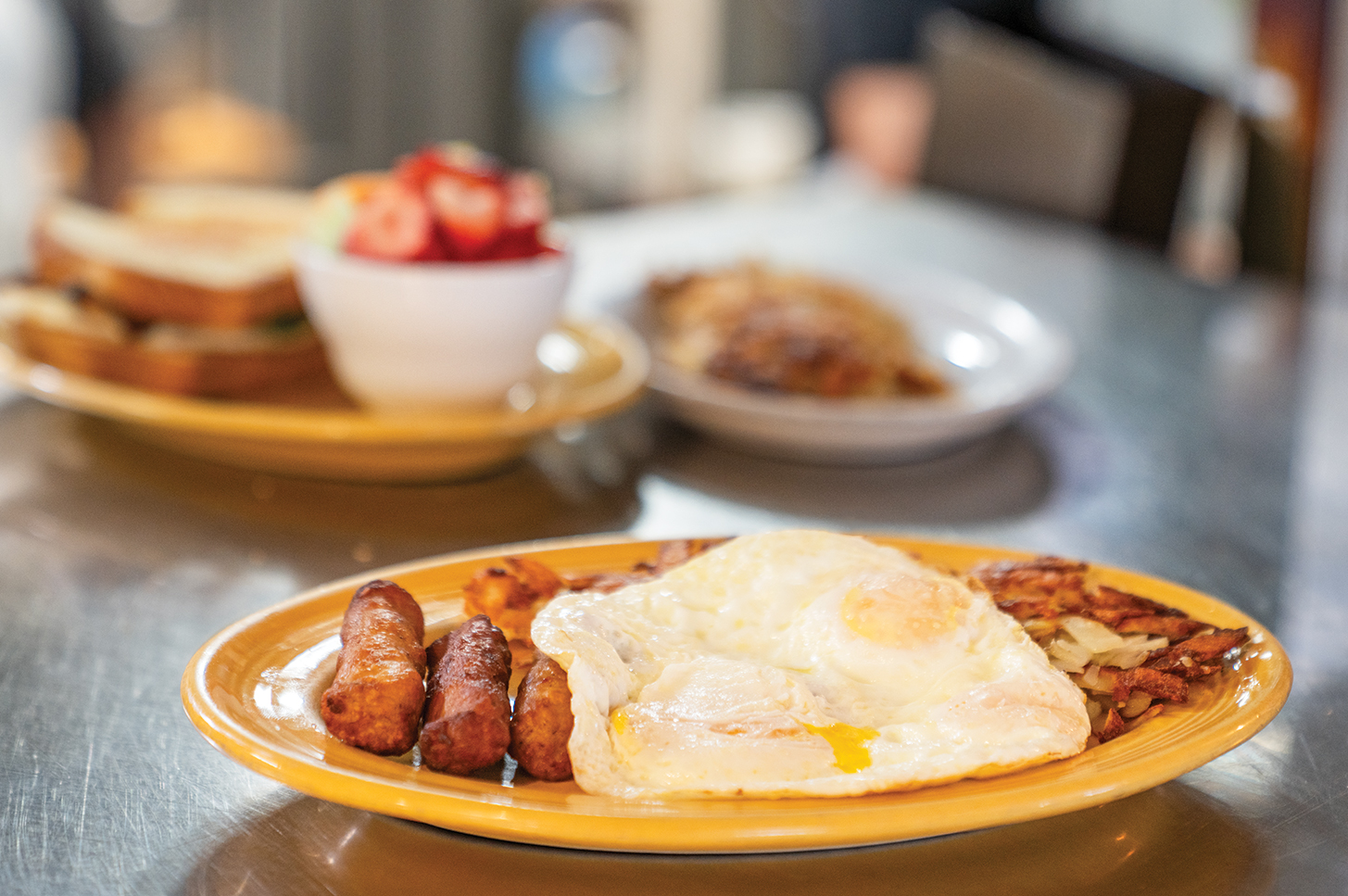
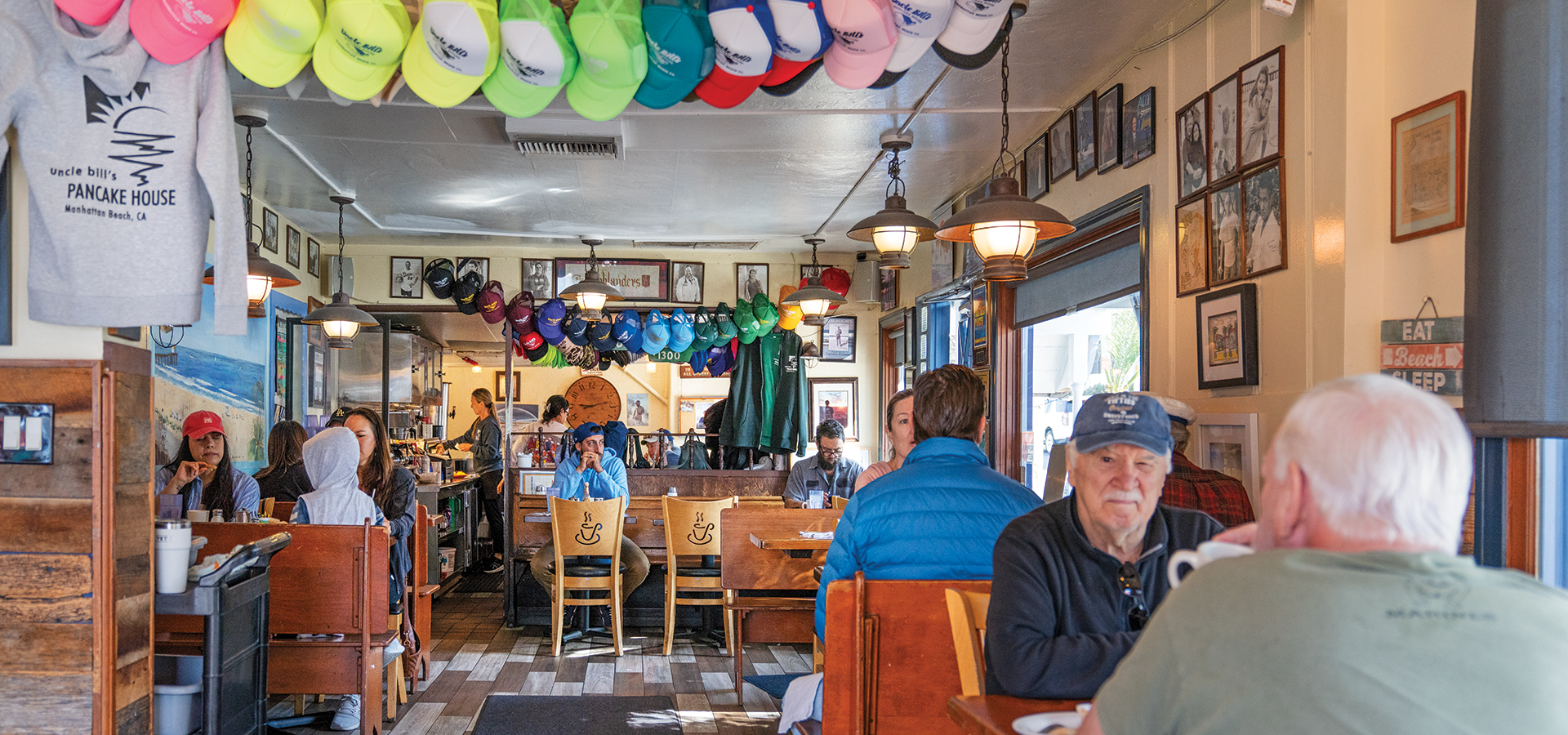
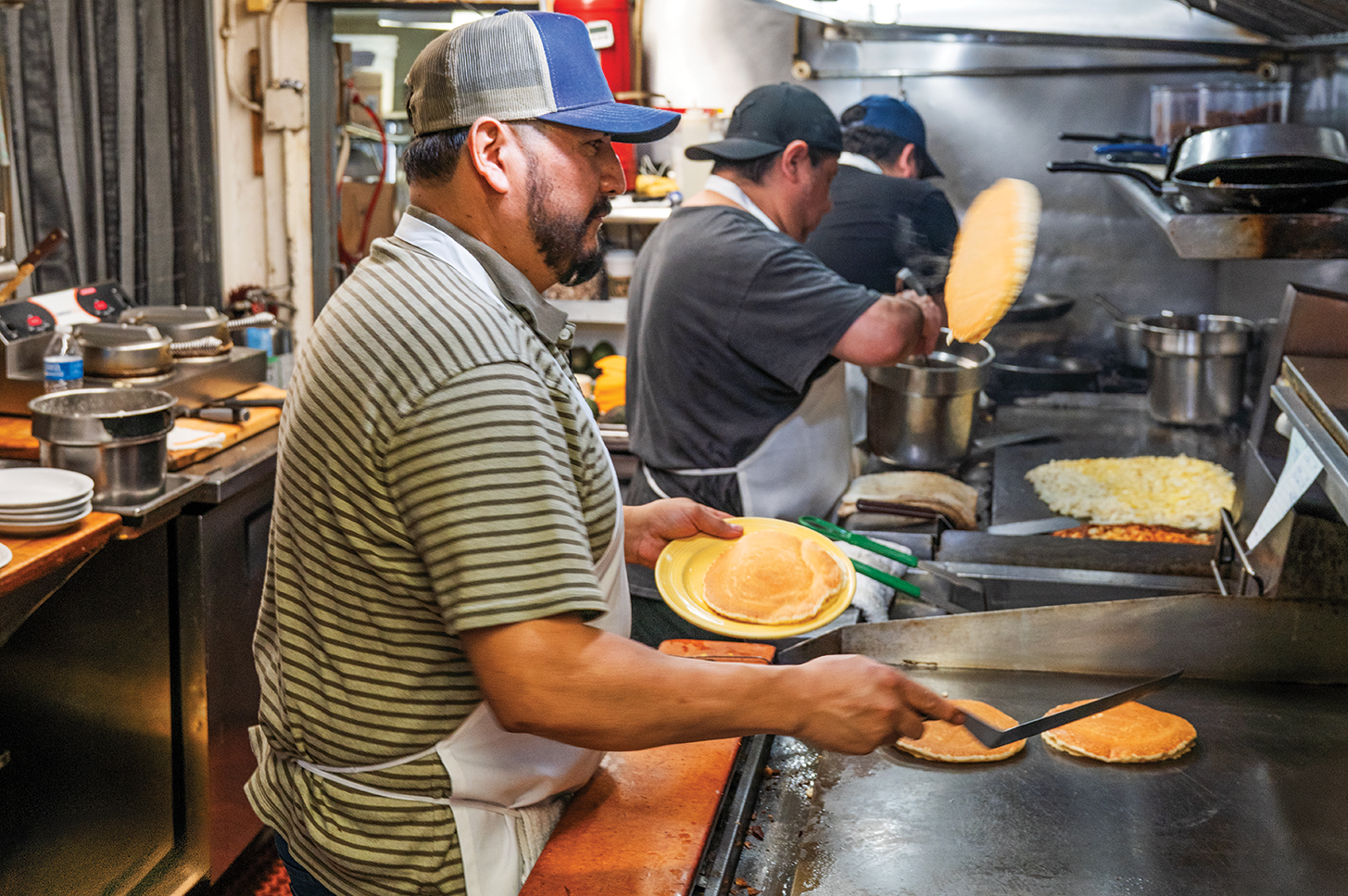
Upon arrival, guests pass through a small blue door that reveals one of Uncle Bill’s defining features: the seating area at a compact diner counter. Though often overlooked today, this counter served the majority of the restaurant’s patrons until 2000, when the neighboring barbershop closed and allowed for expansion. The remaining seats fill quickly, and the space hums with activity as waitstaff move through the narrow galley in practiced coordination, balancing colorful plates piled high with classic breakfast fare.
The walls are lined with family Christmas cards and photographs of longtime regulars, many of them familiar faces within the community. The room feels lived-in, layered with decades of shared memory.
A plate arrives: two muffins, generously buttered, alongside a hot drink. It is a simple order—one this writer has ordered since age 6. The exchange with server Summer is easy, familiar. Conversations between staff and guests feel less transactional and more like reunions.
That sense of continuity is no accident. Many of Uncle Bill’s team members have worked there for years, even decades. Names like Gloria, Greg and Maria have become part of the restaurant’s fabric, their presence woven into its identity. You may spot a Mira Costa student hosting on weekends or during school vacations.
Summer has been a server at Uncle Bill’s for nine years. When asked why she has stayed, her eyes flicker around the room. She shares that it’s all the team members, regulars and eager diners who make Uncle Bill’s so unique.
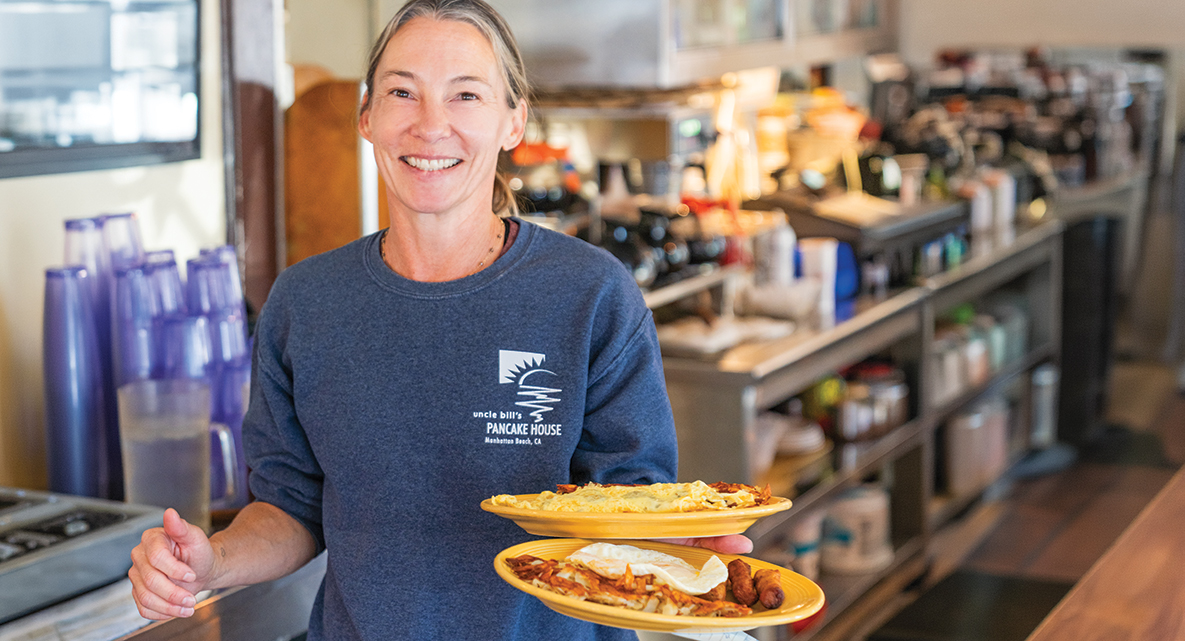
“I’ve formed such deep connections with a lot of people, and they feel like family to me,” she says. “You don’t get that at a lot of places. I know their names. I know what’s going on with them.”
The restaurant’s reach extends far beyond the beach. Vacationers return year after year, making Uncle Bill’s a fixed stop in their travels. It’s a place people remember, and more importantly, a place they come back to.
Manhattan Beach itself has changed dramatically over the past 65 years. What once served as a coastal stopover has evolved into a destination, shaped by constant growth and redevelopment. Buildings are remodeled or replaced, familiar storefronts disappear, and new structures rise in their place. Even local landmarks, from restaurants to schools, have been reimagined, leaving little untouched.
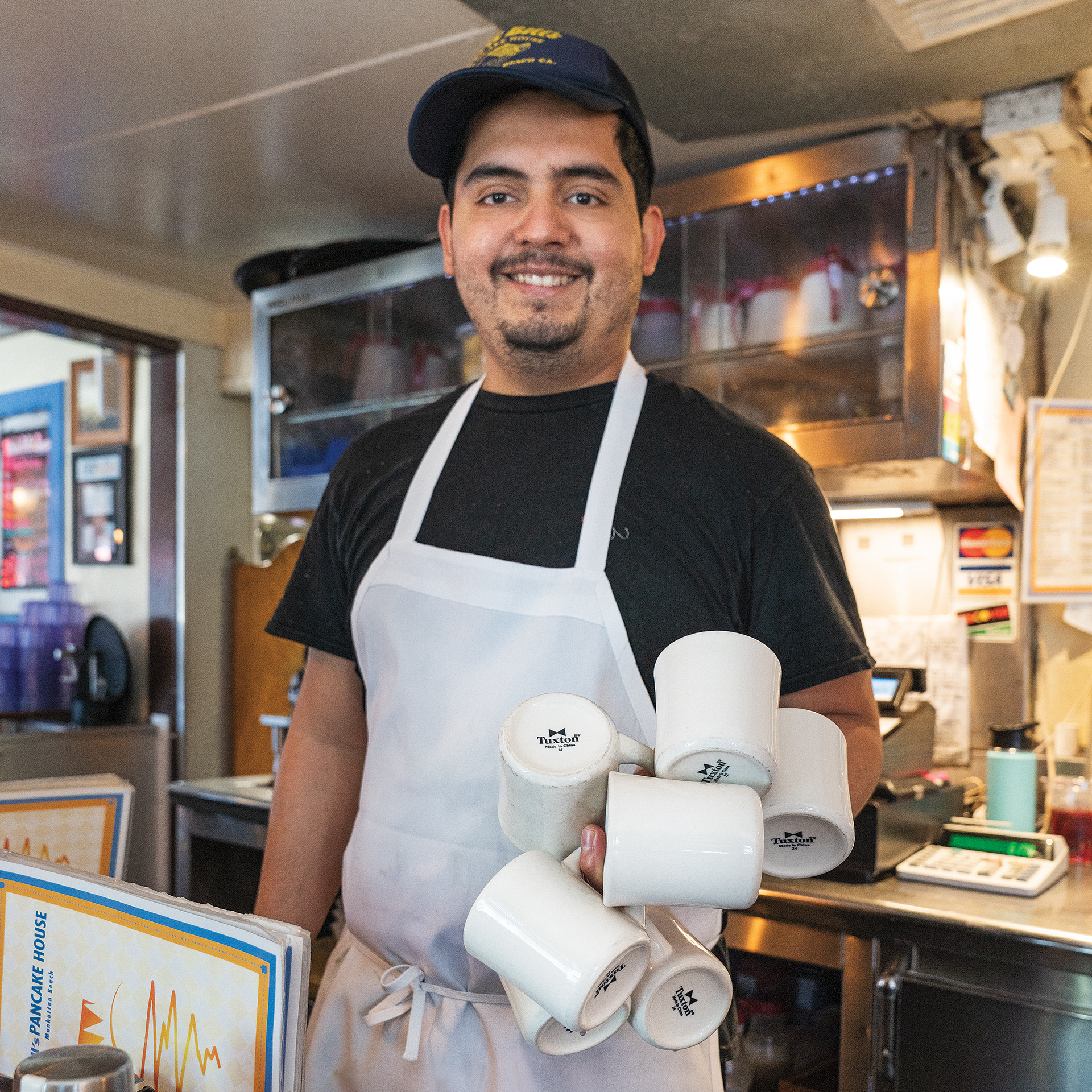
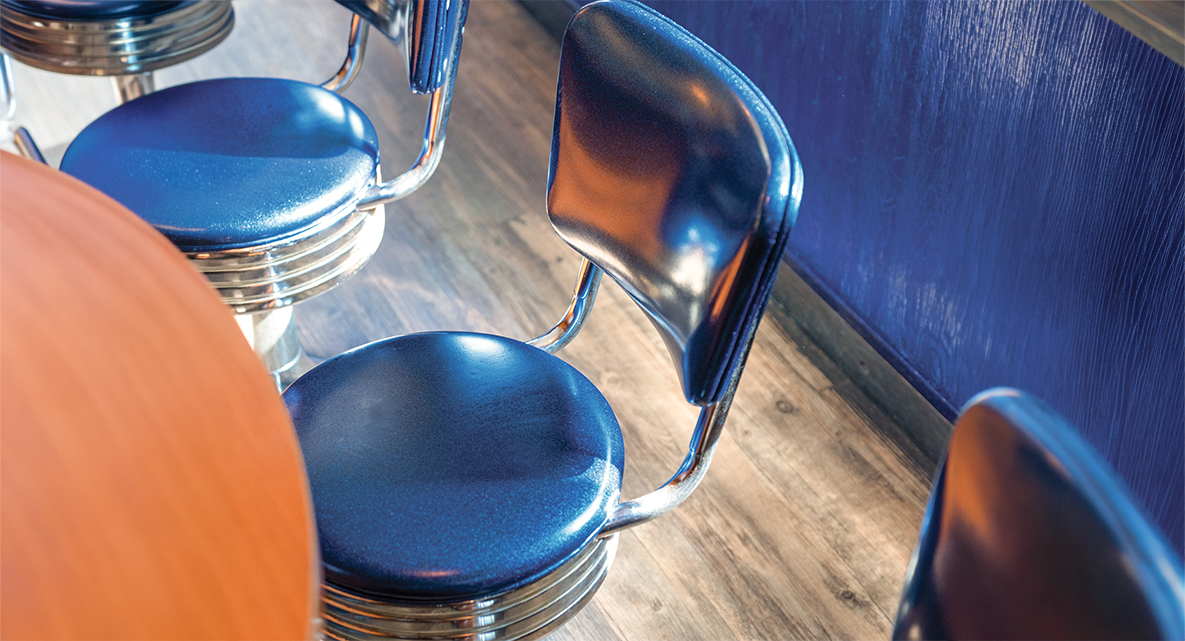
Yet amid this steady transformation, Uncle Bill’s remains. Its presence offers something increasingly rare: continuity. The blue swivel chairs, the well-worn counter and the familiar rhythm of the room hold traces of countless mornings spent there. Generations have passed through its doors, each leaving behind a small imprint.
The coastline itself offers a fitting metaphor. To live along the shore is to understand impermanence, to accept that everything built on sand will eventually be reshaped by the tide. And yet certain places endure—not unchanged, but steadfast in spirit.
Uncle Bill’s is one of them.