







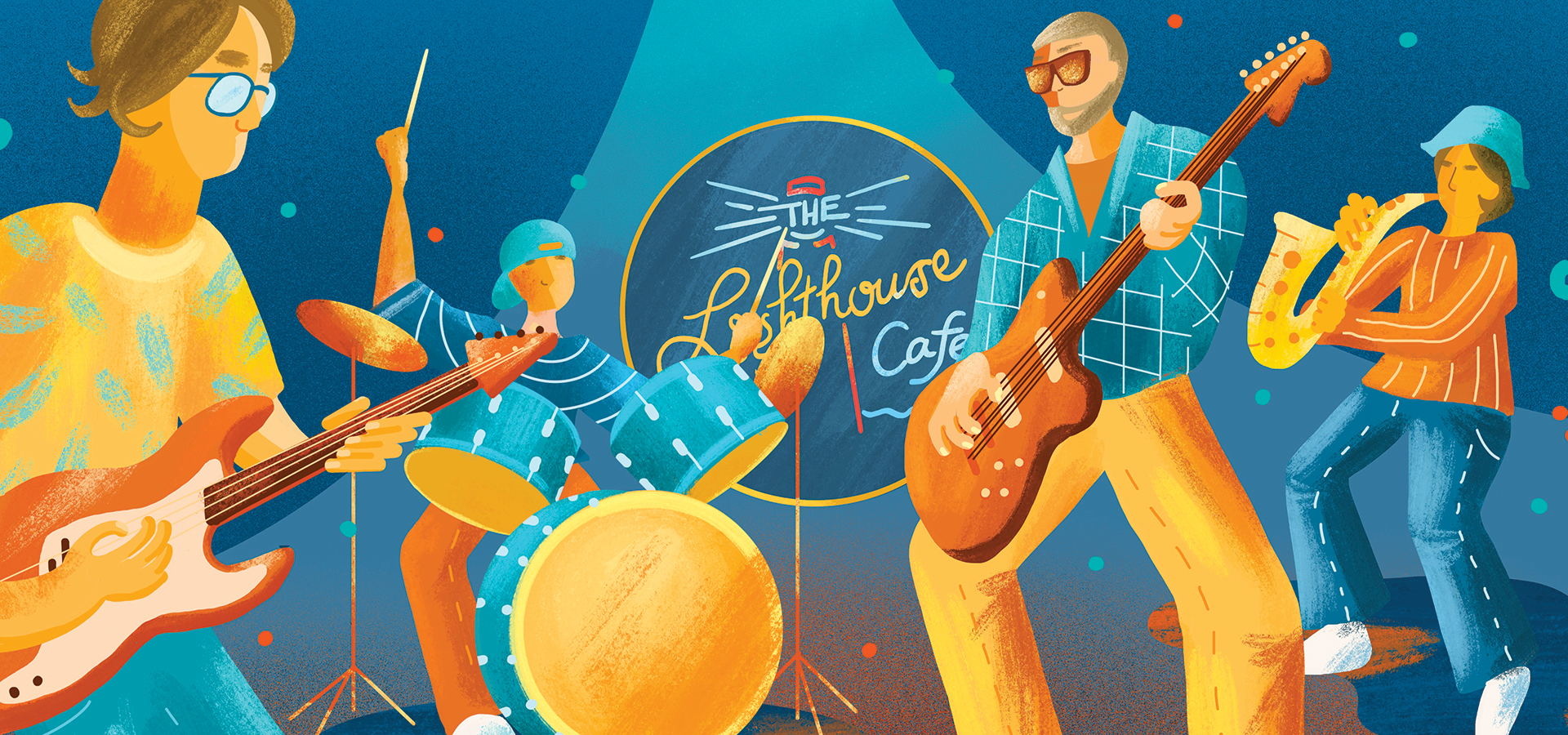
On April 1, 1995, The Lighthouse Café became the unlikely epicenter of a genre born on the California coast. What was billed as a reunion concert evolved into a gathering of surf music pioneers and the next generation of revivalists—all under one roof, playing songs that defined both a sound and a place.
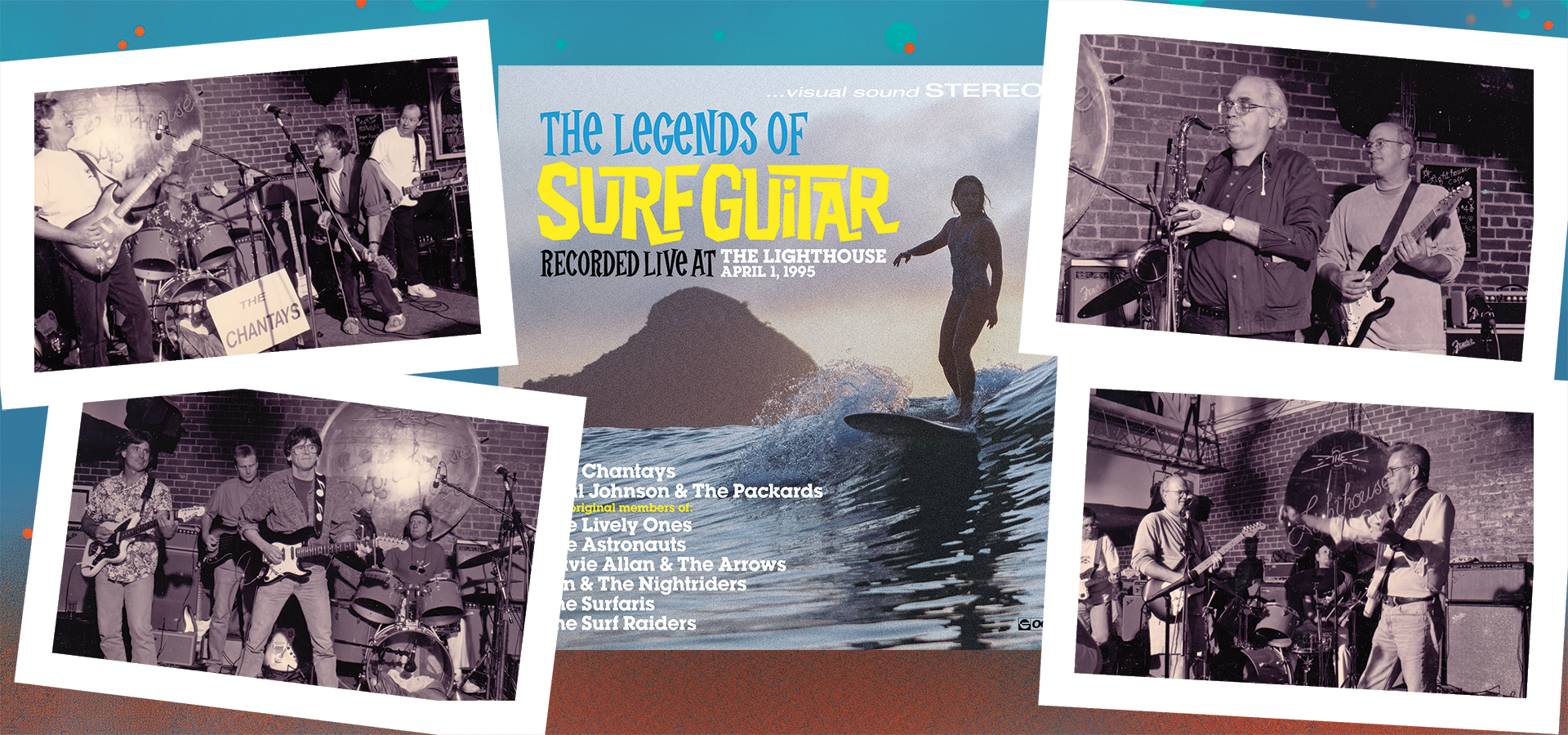
Above: Photographs courtesy of Les Perry
•••
At The Lighthouse, time feels layered. People walk into the Hermosa Pier venue for a drink or to hear a band and find themselves surrounded by decades of music history. And on that night in 1995, history not only lingered in the walls. It also took the stage.
Thirty years later, the concert that was captured on audio that night was released as The Legends of Surf Guitar, a reverb-soaked time capsule recorded live inside The Lighthouse and finally made available to a wider audience. Released on July 4, 2025, on vinyl, CD and digital platforms, the album allows longtime locals and first-time listeners alike to step into that room and hear it for themselves.
Surf music came from a very specific time and place: Southern California in the early 1960s. Few genres can trace such a clear origin story—Fender guitars, teenagers chasing waves and musicians translating that feeling into sound. While the genre eventually spread far beyond California, its roots have always remained here.
In the South Bay especially, that connection still feels personal. For John Blair, co-producer of the album and author of The Illustrated Discography of Surf Music, 1961–1965, the performance at The Lighthouse represented a full-circle moment.
“It was an honor,” he says of performing alongside the musicians whose records shaped his early years. “Growing up in Southern California, learning how to play guitar from those records, and then 30 years later standing on stage with those same people—it was kind of mind-blowing.”
By the late 1970s and early 1980s, surf music had already experienced its first revival. Bands like Jon & The Nightriders, The Surf Raiders, The Malibooz and Los Straitjackets reignited interest in instrumental surf music, bringing it back to clubs and college radio. What had seemed only nostalgic felt relevant again.
By the mid-1990s, that momentum was building further. Films like Pulp Fiction introduced surf instrumentals to a new generation. Surf-centric radio shows gained traction, and curiosity around the genre’s origins continued to grow. That’s when producer and radio DJ/host Les Perry, alongside surf legend Paul Johnson, organized what became The Lighthouse Surf Band Reunion.
The lineup brought together original 1960s icons, including The Chantays, The Surfaris and Davie Allan & The Arrows, alongside revival-era musicians and special guests like Bob Dalley and Bob Demmon of The Astronauts. Supporting them was a deeply respected group of backing musicians, including John.
“It wasn’t just a reunion,” John says. “It was the past, present and future of surf music all in one room.”
“There wasn’t much elbow room,” recalls Mark Linett of the packed room at The Lighthouse.
Mark, a three-time Grammy-winning engineer known for his work with The Beach Boys and Red Hot Chili Peppers, attended as a fan and took with him a small digital recording setup. It would prove far more important than anyone realized at the time.
“I just thought it would be fun to record,” he says.
Using one of the earliest digital 8-track recorders—compact enough to go largely unnoticed—Mark and his friend Elliot Easton of The Cars captured the entire performance. There was no grand plan for release at the time, just a sense that the night was worth preserving.
“It wasn’t just a reunion. It was the past, present and future of surf music all in one room.”
What unfolded inside The Lighthouse wasn’t something that could easily be recreated. It was spontaneous, electric and deeply rooted in shared history. Classics like “Pipeline” and “Wipe Out” blended with newer interpretations. Dancers filled whatever space they could find on the floor, while the music moved seamlessly between generations.
Then the night ended, and the recordings sat untouched for years. Decades later, Mark revisited them and realized what they truly represented. He took the project to Carl Caprioglio, who immediately recognized its potential.
“At first, I wasn’t sure,” Carl admits. “A recording done on the fly in 1995 … you don’t know what you’re going to get. But once I started hearing the mixes, it was clear. It sounded incredible. It didn’t matter what it was recorded on. It held up.”
What followed were years of selecting songs and collaborating to produce the project. The result is an album that preserves a moment that could have easily faded into memory.
Surf music has a way of transporting people. “It reminds me of easy access to the beach,” Carl says. “It has that feeling—it brings you back to a shoreline.”
That emotional connection is part of why surf music continues resurfacing across generations. Without lyrics, it is universal, open to interpretation.
“It’s an alternative to everything else that’s out there,” John adds.
Even now, the genre continues to thrive—not only in California but around the world. From Japan to Eastern Europe, new surf bands continue emerging, drawn to the music’s simplicity and spirit.
But in the South Bay, it resonates differently because this is where it began—shaped by these beaches, these streets and this rhythm of life.
In 2025, three decades after the original performance, The Lighthouse hosted a kind of reunion tied to the release of The Legends of Surf Guitar. The room filled again. The music played again. And for a moment, time folded in on itself.
Surf music in the South Bay feels alive. It still exists in the venues, the musicians and the community that is connected to the water and the sound that came from it.
Back at The Lighthouse, everything feels familiar. People wander in from The Strand, grab a drink and settle into the same room where all this once unfolded. And now, people no longer need to imagine that night in 1995. They can simply press play and dive in.