








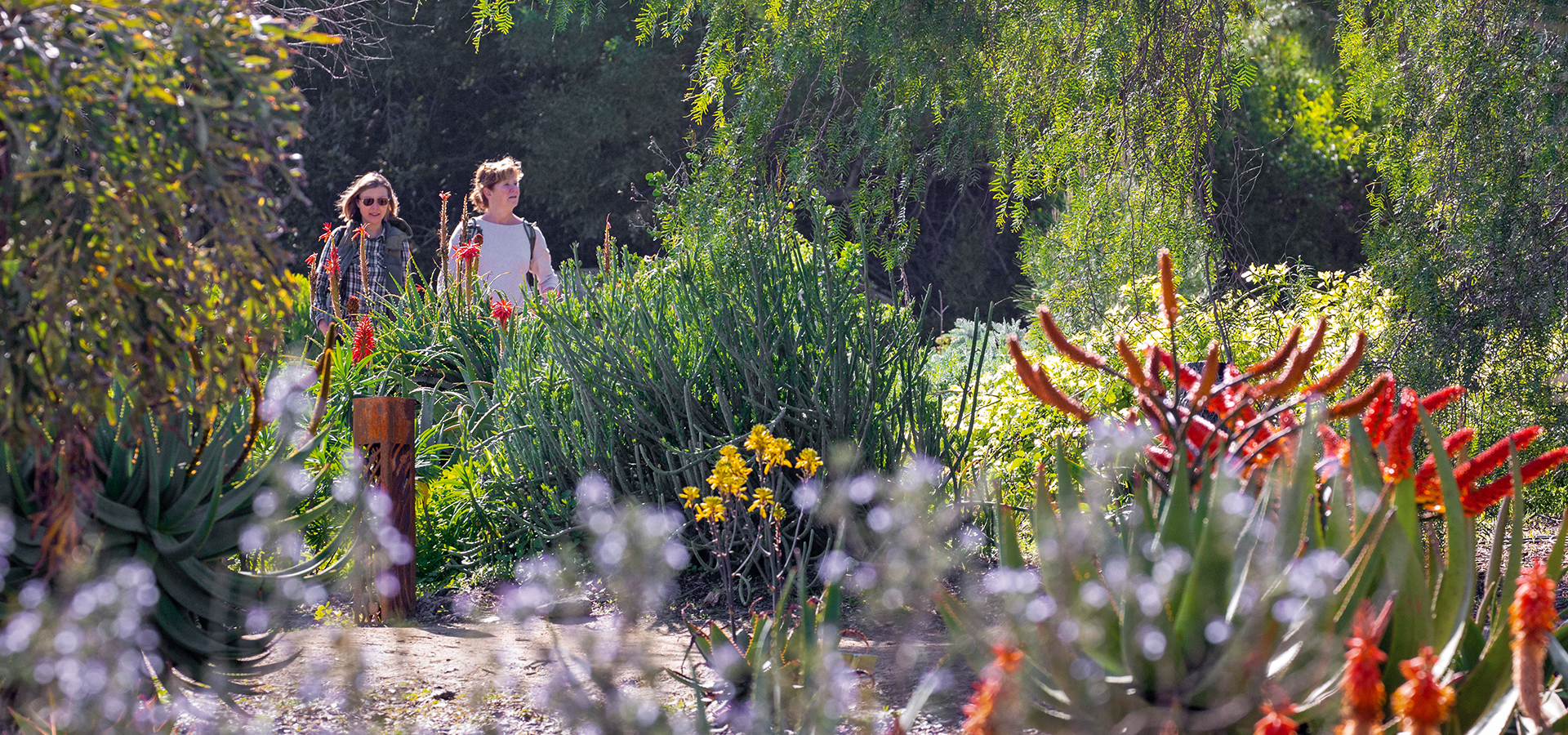
South Coast Botanic Garden is a living paradox, stunningly beautiful yet born from refuse. Perched on a hill in Palos Verdes, it stands as one of the South Bay’s most remarkable reinventions and still somehow one of its best-kept secrets.
In the early 1900s, the land was a diatomaceous earth mine. By 1957, Los Angeles County had purchased the property and opened the Palos Verdes Landfill. What stood there then was not beauty but debris.
Then came vision. In 1961 a group of citizen activists led by Frances Young imagined something radically different. That April, more than 40,000 trees and shrubs were planted. Many did not survive—the soil was difficult and unpredictable—but everything planted was part of an experiment. Persistence took root.
Today more than 200,000 plants grow across the garden’s 87 acres, roughly the size of Disneyland Park. What was once landfill is now lush landscape.
Rolling meadows stretch into the distance. Eucalyptus and silk floss trees sway in the coastal breeze. Hidden trails wind through shaded groves, and bursts of color appear around every bend. The space feels expansive yet intimate at the same time, like a private nature haven suspended above the Pacific.
The air carries a faint floral warmth. Birds dart across the open sky. For a moment, the distractions of everyday life fade away.
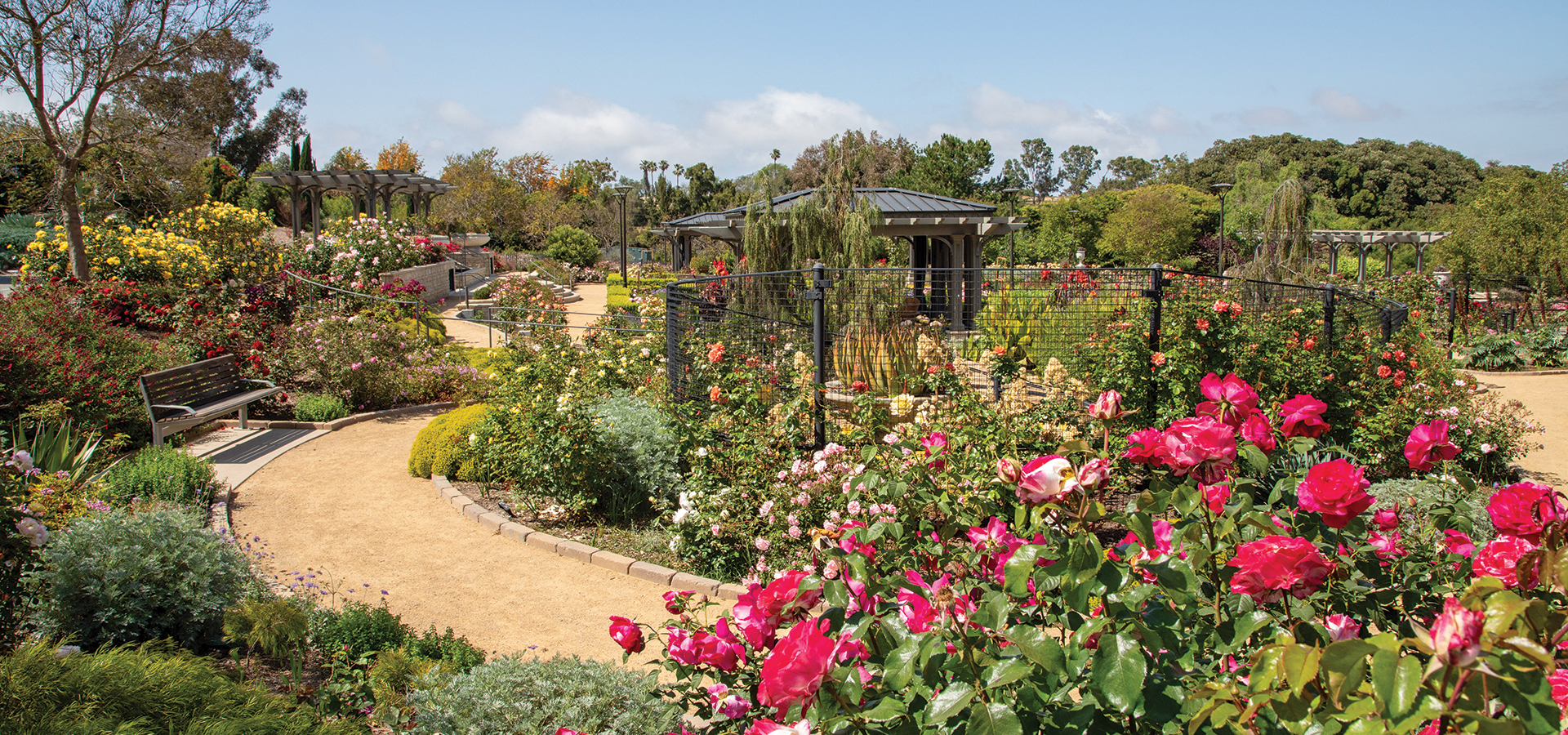
Chief executive officer Adrienne Nakashima describes her favorite place in the garden in similarly poetic terms: “My favorite ‘corner’ of South Coast Botanic Garden isn’t so much a literal corner, rather a prominent and sentimental space: the Dorothy and John Bohannon Rose Garden.”
The rose garden feels elegant and alive, anchored by its split fountain and lined with fragrant blooms. It is the kind of place that invites visitors to linger.
“Sitting on the benches in that space,” Adrienne shares, “I can hear children running down the promenade, excited about what’s to come on their visit, and birds chirping from the amphitheater lawn. It also reminds me of how far we’ve come and how hard we have worked to bring meaningful and beautiful spaces to the community.”
“Once you walk through our gates, your blood pressure reduces, your shoulders relax and a happy sense of well-being wraps around you.”
Then she captures the essence of the garden’s transformation: “It stands as a symbol of what happens when we remain committed to turning our trash to treasure, creating a beautiful botanic garden over a former landfill.”
South Coast Botanic Garden operates through a partnership with Los Angeles County. The county provides gardening and maintenance staff, while the garden’s foundation leads vision, programming and horticultural investment. A new 25-year vision plan is guiding the garden’s next chapter.
“As we look toward the next 25 years under our vision plan, I hope South Coast Botanic Garden becomes an essential part of life in the South Bay, a place people feel deeply connected to and genuinely proud of,” Adrienne says. “I want the garden to be where families create traditions, where children form their first memories of nature, and where adults come to recharge, celebrate and gather.”
She adds, “Most of all, I hope the garden becomes a model for what’s possible: a thriving, sustainable oasis built on a reclaimed landfill that demonstrates resilience, innovation, and the power of nature to transform both land and lives.”
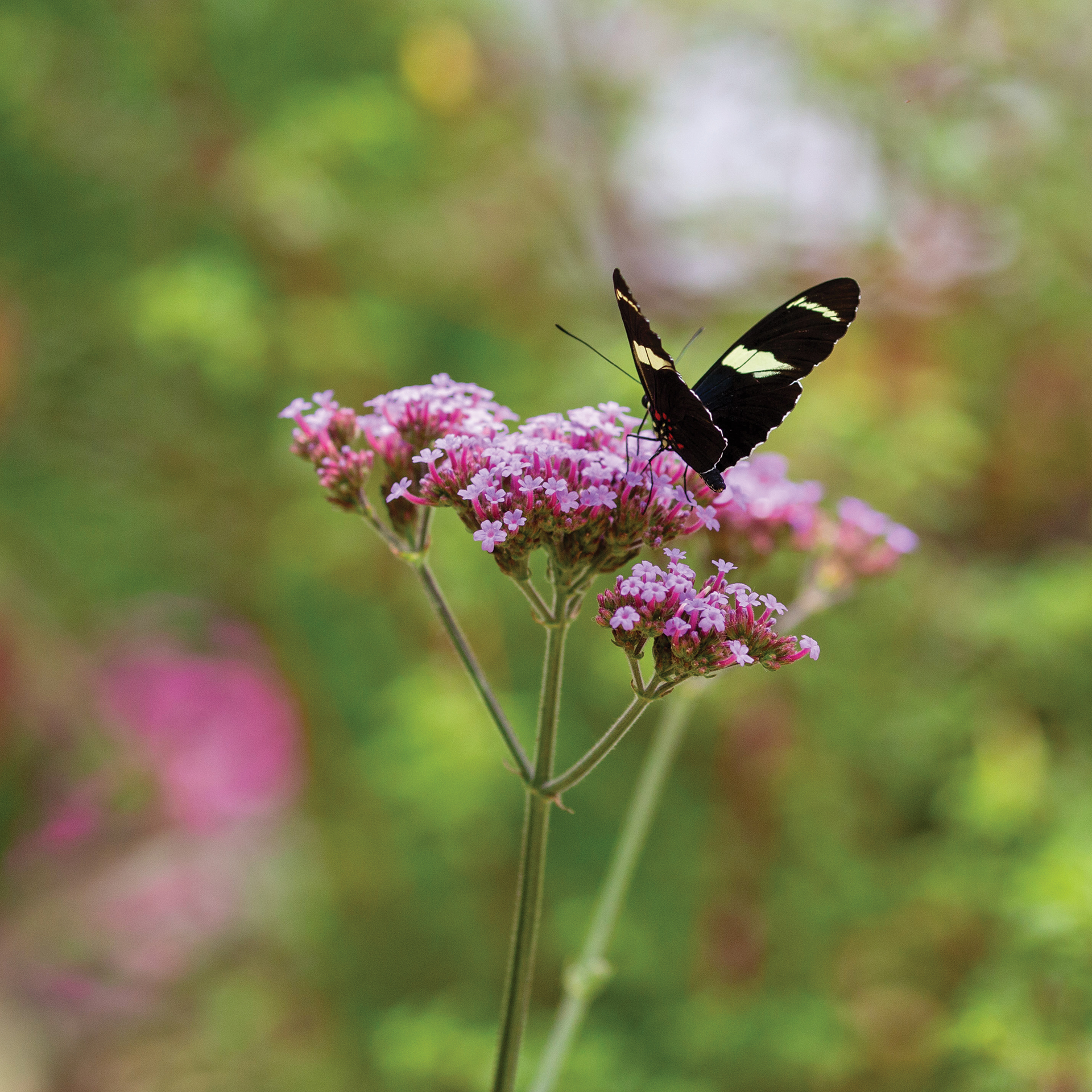
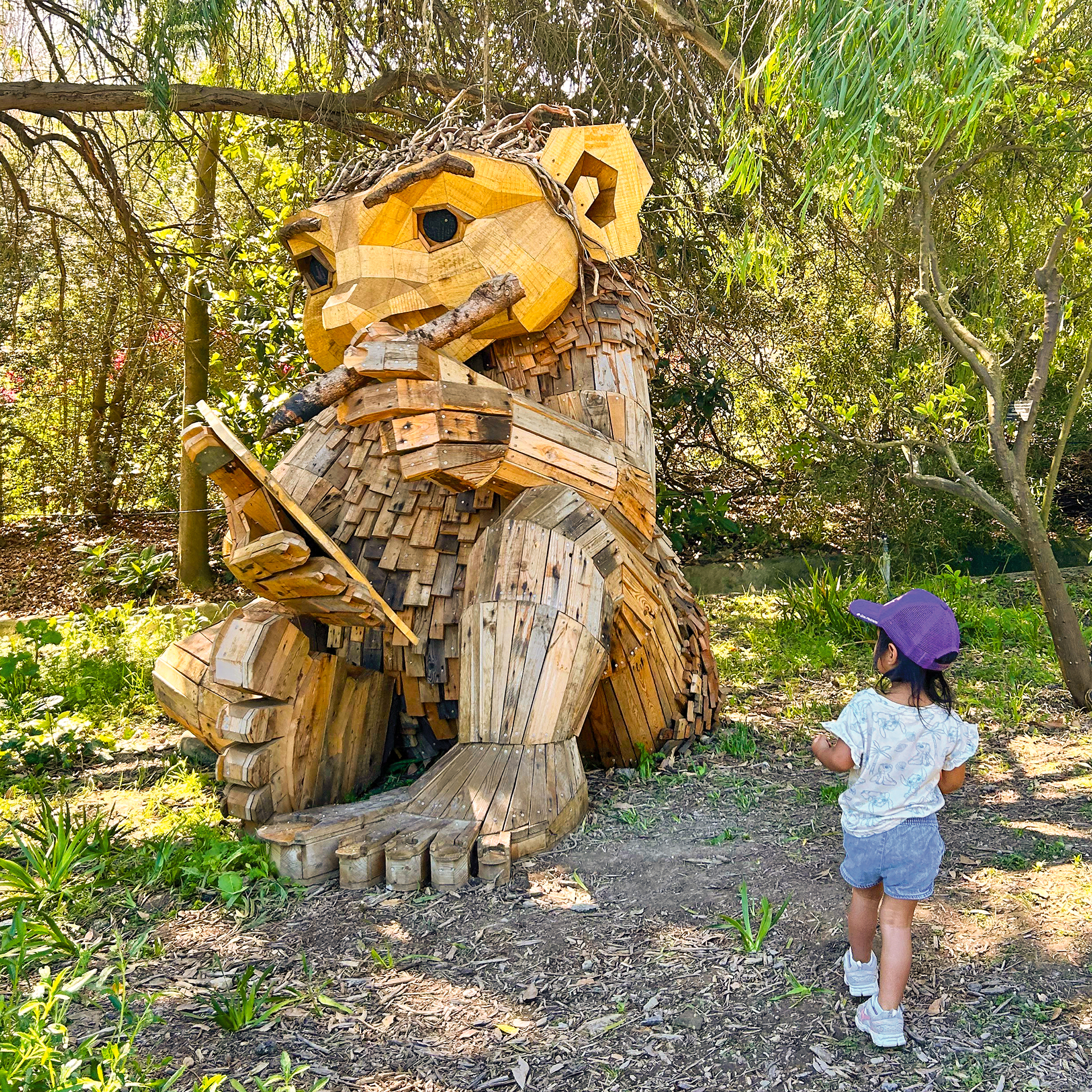
That spirit of transformation is visible in the garden’s programming, led in part by chief impact officer Danielle Lacharite Brown, who has been with the garden for a decade. Currently the garden is hosting Thomas Dambo’s towering troll sculptures nestled throughout the landscape, inviting guests to explore and play. Each spring, the SOAR butterfly pavilion fills with hundreds of tropical butterflies in flight. The Sunset Series brings live music to summer evenings as the sky shifts pink and gold behind the hills.
And then there is The Canopy Club, a woodland dance experience that brings guests into the trees after dark. “It is going to be a blast,” Danielle says of the new speakeasy-style dance party where visitors will see some of the trolls illuminated at night.
With so much energy and activity, preserving the garden’s sense of serenity is intentional.
“We know that not everyone considers themselves a ‘botanical garden-goer,’ so we craft special experiences to help entice folks through our gates,” Danielle explains. “We think everyone should be a garden-goer. The wild and woolly nature trails of our back 40 acres are quiet even when a Jimmy Buffett cover band is rocking out on the Upper Meadow during the Sunset Series.”
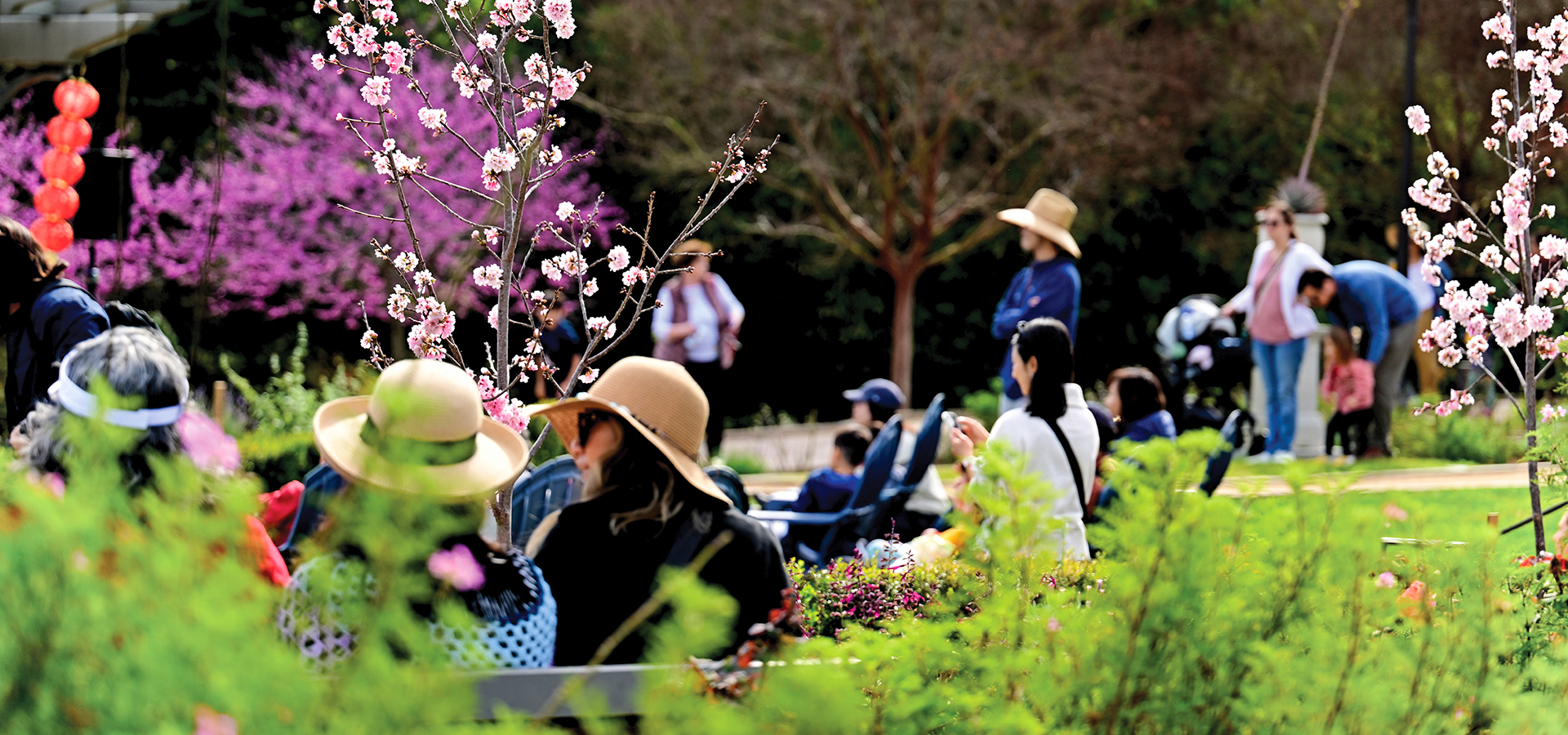
That balance is part of what makes the garden so distinctive. Visitors can wander into music and laughter or slip away into stillness, accompanied only by wind through the leaves.
Dog-walking hours offer one of the garden’s most charming perspectives. “Dog owners see the garden through a different lens when they visit with their pups,” Danielle says. “Walks slow down as the pooches stop and sniff every plant. Ears perk up at every rustle in the bushes. When this happens, their humans start to notice the subtle beauty of South Coast Botanic Garden.”
She says that slowing down feels essential. “Once you walk through our gates, your blood pressure reduces, your shoulders relax and a happy sense of well-being wraps around you.”
In a world that often feels heavy, this place feels hopeful. South Coast Botanic Garden is proof that land can be restored, community vision matters and something once discarded can bloom into something extraordinary. From the rose garden benches to wooded trails and summer concerts, the garden invites visitors to step inside, linger among the roses, wander the paths and stay for the music.
It is more than a place to visit. It is a haven perched above everyday life, quietly reminding us of what is possible.